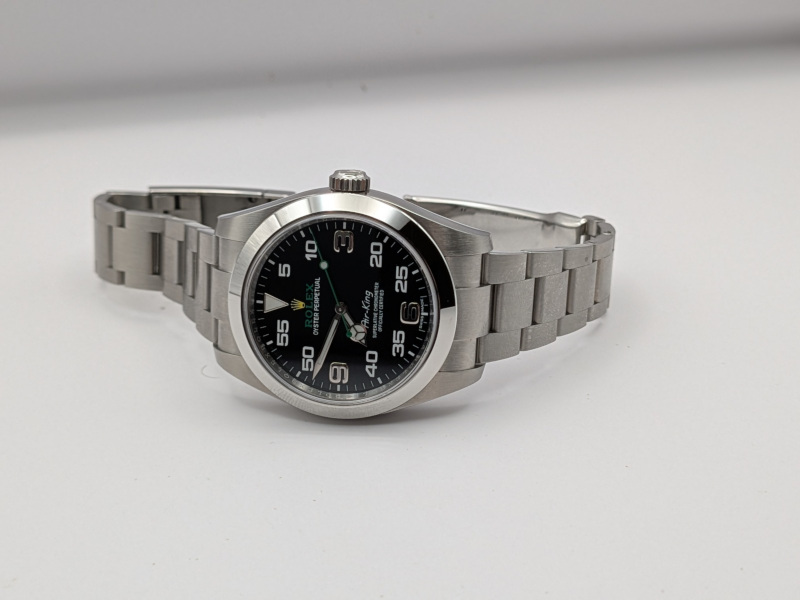
Rolex is a Swiss luxury watchmaker founded in 1905, famous for robust, waterproof Oyster cases, self‑winding Perpetual movements, and iconic models like the Rolex Datejust, Rolex Submariner, and Rolex Daytona. For anyone searching “Rolex for sale” or researching “how to spot a fake Rolex,” understanding the brand’s history, major models, and authentication basics is essential before buying.
Table of Contents
ToggleRolex History and Innovation
Rolex began in 1905 as Wilsdorf & Davis in London, founded by Hans Wilsdorf and Alfred Davis to distribute precise Swiss movements in quality cases. The “Rolex” name was registered in 1908, and the company later moved its headquarters to Geneva, operating under Montres Rolex SA.
Rolex introduced the waterproof Oyster case in 1926, followed by the self‑winding Oyster Perpetual concept in 1931, combining water resistance with an automatic rotor. Over the mid‑20th century, Rolex launched milestone models such as the Datejust (1945), Day‑Date (1956), Submariner (1953), GMT‑Master (1955), and Cosmograph Daytona (1963), establishing a complete tool‑watch and dress‑watch lineup.
Core Rolex Technologies
Rolex’s identity centers on the Oyster case, Perpetual movement, and chronometer‑grade accuracy. Most modern Rolex watches offer screw‑down crowns, robust case construction, and certified movements designed for durability in everyday and professional use.
The brand gradually shifted to in‑house calibers across the catalog, adding features like Parachrom hairsprings, improved shock resistance, and long power reserves in modern references. Precious metal alloys such as Everose gold and proprietary steels, plus strict quality control, help explain why buyers actively seek an authentic Rolex watch and search for terms like “Rolex for sale” or “Rolex watch for sale” rather than generic luxury watches.
Major Rolex Models and Families
Below is an overview of the main Rolex watch families commonly encountered when browsing Rolex for sale online.
Rolex Oyster Perpetual
The Rolex Oyster Perpetual is the simplest expression of the brand’s waterproof, automatic watch: time‑only, with no date or complications. Offered in multiple sizes and dial colors, the modern Oyster Perpetual appeals to buyers wanting a clean, versatile Rolex watch that still has the Oyster case and Perpetual rotor heritage.
Recent Oyster Perpetual models feature colorful dials and updated movements, making them popular entry points for first‑time buyers searching for a Rolex for sale with classic proportions. Despite being the “basic” model, build quality and finishing are on par with more expensive references.
Rolex Datejust
The Rolex Datejust is one of the brand’s most recognizable watches, introduced in 1945 as the first self‑winding waterproof chronometer wristwatch with an automatically changing date. It typically features a date window at 3 o’clock with a Cyclops magnifier, and is available in multiple sizes (31, 36, 41 mm), metals, bezels, bracelets, and dials.
Variants include Oyster or Jubilee bracelets, smooth, fluted, or gem‑set bezels, and everything from classic silver sunburst dials to Roman numerals or diamond markers. Because of this flexibility, the Rolex Datejust commonly appears across platforms listing Rolex for sale, ranging from understated steel models to two‑tone and full‑gold luxury versions.
Rolex Submariner
The Rolex Submariner is one of the most famous dive watches in history, originally launched in the 1950s as a professional diver’s tool with a rotating bezel and strong water resistance. Modern Submariners offer 300 m of water resistance, unidirectional ceramic bezels, and luminous markers for underwater legibility.
There are no‑date Submariner versions and Submariner Date versions, plus steel, two‑tone, and precious‑metal references with black, green, and blue dials and inserts. Because of its combination of rugged utility and prestige, “Rolex Submariner for sale” is one of the most searched phrases among luxury watch buyers.
Rolex Daytona (Cosmograph Daytona)
The Rolex Cosmograph Daytona debuted in 1963 as a chronograph designed for motorsport and timing laps on a tachymeter bezel. Early manual‑wind Daytonas evolved into the modern automatic series, with high‑performance in‑house movements and robust cases.
Modern Rolex Daytona models come in steel, gold, Rolesor, and platinum, with a mix of metal bracelets and Oysterflex rubber options. Strong demand and limited supply mean authentic Rolex Daytona examples, especially steel references, are heavily sought after and frequently counterfeited, making knowledge of how to spot a fake Rolex crucial for this model.
Rolex GMT Master and GMT Master II
The Rolex GMT‑Master was created in the 1950s for pilots, featuring a 24‑hour hand and rotating bezel to track multiple time zones. The later GMT‑Master II added an independently adjustable hour hand, making travel adjustments easier.
Colorful bezel combinations like “Pepsi,” “Batman,” and “Root Beer” have become iconic, and the GMT‑Master II ranks alongside the Submariner and Daytona among the most in‑demand Rolex watch models. Newer releases feature ceramic bezels, improved calibers, and a mix of Oyster and Jubilee bracelet options.
Rolex Day Date (“President”)
The Rolex Day‑Date, launched in 1956, was the first wristwatch to display both the date and the day of the week in full. Traditionally offered only in precious metals (gold or platinum), it is closely associated with heads of state and business leaders and is often nicknamed the “President.”
Day‑Date watches are commonly paired with the President bracelet, though Rolex has produced certain references on leather straps and Oyster bracelets as well. For buyers searching premium Rolex for sale listings, the Day‑Date represents the top of the classic dress‑watch hierarchy within the brand.
Rolex Explorer and Explorer II
The Rolex Explorer evolved from watches worn during mountaineering expeditions, featuring a simple, legible dial and robust Oyster case suited for harsh environments. The Explorer II adds a fixed 24‑hour bezel and a prominent additional hand, useful for distinguishing day from night in caves or polar conditions and for basic dual‑time use.
Both models emphasize durability and clarity over luxury flourishes, appealing to enthusiasts who value tool‑watch heritage within the Rolex lineup. Explorers often offer relatively understated options for those seeking a Rolex watch that does not draw as much attention as a Submariner or Daytona.
Rolex Milgauss
The Rolex Milgauss was designed to resist magnetic fields up to 1,000 gauss, aimed at engineers, scientists, and technicians working near strong magnetism. Its anti‑magnetic properties are achieved through specialized shielding and movement design.
Modern Milgauss models feature distinctive touches such as lightning‑bolt seconds hands and tinted crystals, making them visually unique within the Rolex catalog. They appeal to buyers who want a Rolex watch with scientific heritage and a slightly unconventional aesthetic.
Rolex Sea Dweller and Deepsea
The Rolex Sea‑Dweller expands on the Submariner concept with greater depth ratings and a helium‑escape valve aimed at saturation divers. Deepsea versions push depth ratings even further, resulting in thicker cases and highly specialized construction.
Although many owners never dive to such depths, Sea‑Dweller and Deepsea models are popular among those who want the most technically capable dive‑watch Rolex for sale. They typically wear larger on the wrist compared to the standard Submariner.
Rolex Yacht Master and Yacht Master II
The Rolex Yacht‑Master blends nautical styling with everyday luxury, with bi‑directional bezels and sporty but refined aesthetics. The Yacht‑Master II adds a regatta chronograph and programmable countdown, making it a specialized tool for yacht racing.
Both lines often feature precious metals or Rolesium (steel and platinum) combinations, appealing to buyers who want a sportier Rolex watch with a more luxurious, maritime‑inspired character.
Rolex Sky Dweller
The Rolex Sky‑Dweller is one of the most mechanically complex current Rolex models, combining an annual calendar with dual time indication. A rotating Ring Command bezel is used to set various functions, integrating the bezel into the adjustment system.
Initially produced mainly in precious metals but later expanded into more accessible configurations, the Sky‑Dweller targets frequent travelers wanting a high‑complication Rolex watch. Recent releases with steel and mixed‑metal constructions have broadened its appeal in the Rolex for sale marketplace.
Other Notable Lines and Tudor
In addition to the main families, Rolex has produced special models and dressier pieces, and it also launched Tudor as a more affordable sister brand in the 1950s. Tudor uses its own designs and movements today but historically leveraged Rolex‑style cases and components.
On many platforms listing Rolex for sale, Tudor appears alongside Rolex for buyers who want similar styling and heritage at a lower price point. However, Tudor watches are branded and positioned separately, so they are not interchangeable with a Rolex watch in terms of branding and resale perception.
Key Rolex FAQs (Including How To Spot a Fake)
This section is structured to be helpful both for traditional SEO and AI answer engines by directly answering common user intents around “Rolex for sale,” “Rolex watch,” and “how to spot a fake Rolex.”
What Makes a Rolex Watch Special?
Rolex watches combine robust construction, chronometer‑grade mechanical movements, and strong water resistance with restrained, timeless design. They are engineered for everyday wear yet often hold value well, contributing to the perception that buying a Rolex for sale is both a lifestyle purchase and a potential long‑term asset.
Many iconic models, from the Rolex Datejust and Rolex Submariner to the Rolex Daytona and Rolex Oyster Perpetual, have changed relatively little in overall design, which reinforces brand recognition and long‑term desirability. Limited supply and carefully managed distribution also support strong demand on the secondary market.
What Are The Most Popular Rolex Models?
Commonly sought‑after models include:
- Rolex Datejust (classic date watch).
- Rolex Submariner (dive watch).
- Rolex Daytona (chronograph).
- Rolex GMT‑Master II (traveler’s GMT).
- Rolex Day‑Date (President dress model).
- Rolex Oyster Perpetual (time‑only).
- Rolex Explorer and Explorer II (tool watches).
These families appear frequently in listings when buyers search “Rolex for sale” or “Rolex watch for sale” across marketplaces and dealer sites
How To Spot a Fake Rolex (Core Checks)
High‑end counterfeits can be convincing in photos, so checking multiple details is essential. When evaluating any Rolex for sale, especially online, use the following key points.
- Serial and model numbers
- Genuine Rolex serial and reference numbers are cleanly, deeply engraved between the lugs or on the inner rehaut (depending on generation), with consistent fonts and alignment.
- Fakes often have shallow, uneven, or poorly aligned engraving, or numbers that do not match the correct era for that model.
- Cross‑check the numbers against known charts and ensure they match the case style and approximate production year for the reference offered.
- Dial printing, logo, and lume
- Authentic Rolex dials have extremely crisp, sharp printing; the coronet logo at 12 o’clock is well defined, not fuzzy or uneven.
- Counterfeit dials may show inconsistent fonts, misaligned text, misspellings, or raised/bleeding ink, especially on popular models like the Rolex Submariner and Rolex Daytona.
- Lume on a genuine Rolex is evenly applied and glows consistently after exposure to light, whereas poor or patchy lume is a red flag.
- Movement behavior and second hand
- Most modern Rolex watches use smooth‑sweeping automatic movements with relatively small increments per second, not a large, obvious “tick.”
- Many fakes use quartz movements, making the seconds hand jump once per second, which is a classic sign of a fake Rolex.
- However, some counterfeiters use cheap automatic movements, so smooth sweep alone is not enough to confirm authenticity.
- Weight, case, and bracelet quality
- Rolex uses high‑grade materials such as 904L‑type stainless steel and solid links, so authentic pieces feel solid and well balanced in the hand.
- Fakes often feel too light, have rattly bracelets, sharp unfinished edges, or hollow center links, especially in knockoff Oyster and Jubilee bracelets.
- Check clasp engravings and crown logos for clean finishing; poor laser etching (too deep or uneven) is another warning sign.
- Cyclops magnifier and date alignment (for Datejust/Submariner/Day‑Date, etc.)
- Genuine Rolex watches with a Cyclops lens display the date at approximately 2.5x magnification, filling most of the date window under the lens.
- Many counterfeits have weaker magnification, misaligned dates, or distorted numerals when viewed through the Cyclops, especially on fake Rolex Datejust and fake Rolex Submariner models.
- Laser‑etched crown at 6 o’clock (modern sapphire crystals)
- On many modern references, a tiny Rolex coronet is laser‑etched at the 6 o’clock position on the crystal; it is extremely faint and often requires magnification to see clearly.
- On fake crystals, the etched crown is often too bold or obvious, sometimes visible without magnification, indicating lower finesse in the etching process.
- Crown operation and winding feel
- Unscrewing and winding the crown on a real Rolex should feel smooth and controlled, with precise detents when setting the time or date.
- A gritty, overly loose, or rough winding experience suggests an inferior movement and poor machining, which are common traits of counterfeit watches.
- Documentation, provenance, and seller reputation
- Factory cards, booklets, and boxes can also be faked, so they should be consistent with the era and region of the watch and inspected carefully.
- Buyers should research the seller’s history, reviews, and return policies; reputable dealers of Rolex for sale typically provide verifiable references and clear authentication practices.
When in doubt, the safest approach to how to spot a fake Rolex is to have the watch opened and inspected by a qualified watchmaker or to buy only from trusted, well‑vetted sources. The cost of professional verification is modest compared to the potential loss from purchasing a counterfeit Rolex watch.
Are Rolex Watches a Good Investment?
Historically, many Rolex models have held value well, with certain references appreciating significantly in the secondary market. Elevated demand for pieces like the Rolex Daytona, Rolex Submariner, and specific Rolex Datejust or GMT‑Master II configurations has reinforced the perception of Rolex as a strong store of value.
However, performance varies by model, reference, condition, and market cycle; buyers should primarily choose a Rolex watch they will actually wear and enjoy rather than relying solely on appreciation. Authenticity, originality of parts, and completeness of the set (box and papers) are key factors in long‑term value.
Should I Buy a New or Pre Owned Rolex?
- New Rolex watches from authorized dealers offer full factory warranty, but popular models can be difficult to obtain at list price.
- Pre‑owned Rolex for sale listings provide broader choice of references, including discontinued models and vintage pieces, often at competitive market prices.
- Whichever route you choose, verifying authenticity and understanding how to spot a fake Rolex are essential steps before completing a purchase. For rare or high‑value pieces like a Rolex Daytona or historically important Submariner, independent inspection is especially prudent.
How do Rolex References and Nicknames Work?
Rolex uses numeric reference codes to specify a model’s case size, metal, and configuration. Enthusiasts also use nicknames such as “Pepsi” for blue‑red GMT bezels, “Hulk” or “Kermit” for green Submariners, and “Batman” for blue‑black GMT bezels.
When browsing Rolex for sale, always match the reference number in the listing to the expected specifications (e.g., bezel color, dial type, bracelet style) for that reference. Mis‑matched components can indicate either heavy modification or, in some cases, counterfeit or franken‑watch construction.
Browse Rolex watches for sale, inspected in-house and listed with full condition detail.
More Rolex Resources
- Rolex Serial Number Lookup
- How to Spot a Fake Rolex
- How to Tell If a Rolex Is Real
- Why Are Rolex Watches So Expensive?
- Where Are Rolex Watches Made?
Browse Pre-Owned Buyer's Guides by Brand
- Pre-Owned Omega Buyer's Guide
- Pre-Owned Panerai Buyer's Guide
- Pre-Owned TAG Heuer Buyer's Guide
- Pre-Owned Breitling Buyer's Guide
- Pre-Owned Cartier Buyer's Guide
- Pre-Owned Hublot Buyer's Guide
- Pre-Owned Ulysse Nardin Buyer's Guide
- Pre-Owned Zenith Buyer's Guide
- Pre-Owned Grand Seiko Buyer's Guide
- Pre-Owned Jaeger-LeCoultre Buyer's Guide
- Pre-Owned Tudor Buyer's Guide
- Pre-Owned IWC Buyer's Guide