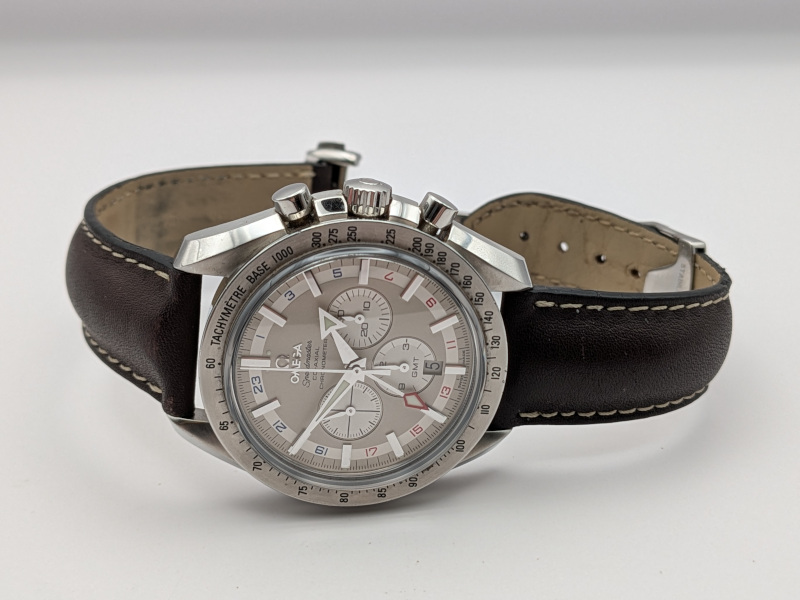
Omega Brand History
Omega SA is a Swiss luxury watchmaker based in Biel/Bienne, Switzerland, with roots going back to 1848 when Louis Brandt began assembling watches in La ChauxdeFonds. The company adopted the name Omega in 1894 after a breakthrough in industrialized, highly precise movement production and eventually became a flagship brand within the Swatch Group.
Over the 20th century, Omega earned a reputation for precision in observatory trials, became the official timekeeper of the Olympic Games, and produced military watches and professional dive watches. Omega’s fame exploded when the Omega Speedmaster became the first watch worn on the Moon during NASA’s Apollo missions, cementing its status among the most historically significant tool watches ever made.
Table of Contents
ToggleMajor Omega Collections & Models
Omega’s catalog is organized into a few core families that matter most for anyone searching “Omega watches for sale”: Speedmaster, Seamaster (including Planet Ocean), Constellation, and De Ville. Each collection has distinct design codes, movements, and sublines that appeal to different buyers, from hardcore enthusiasts to first time luxury watch owners.
Overview Table of Key Omega Lines
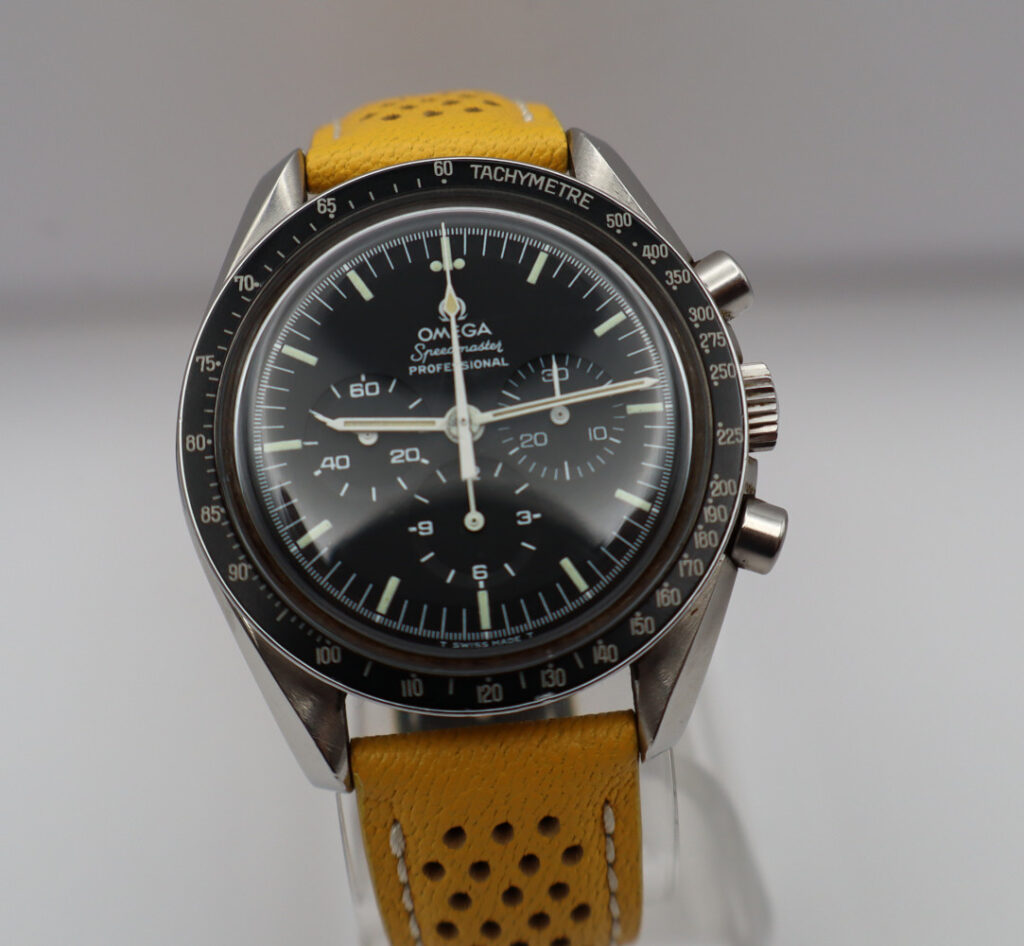
Omega Speedmaster: Models & Variations
The Omega Speedmaster was introduced in 1957 as a racing chronograph, named for its tachymeter bezel, and quickly evolved into the legendary “Moonwatch.” Early references such as CK 2915 and CK 2998 established the core design: triple register layout, high contrast black dial, and domed Hesalite (acrylic) crystal.
Key Speedmaster families and variations include:
Speedmaster Professional Moonwatch
⦁ Manual wind chronograph, 42 mm case, asymmetrical twisted lug case with “Professional” on the dial.
⦁ Historic calibres: 321, 861, 1861/1863; modern pieces often use the CoAxial Calibre 3861 with METAS Master Chronometer certification.
Speedmaster ’57 & Heritage Models
⦁ Vintage inspired designs referencing CK 2915 and other early models, often with broad arrow hands and straight lugs.
⦁ Frequently powered by modern CoAxial movements while keeping midcentury looks.
Speedmaster Racing
⦁ Originally 38–40 mm automatic chronographs marketed with racing inspired dials and colored details, later grown to 44.25 mm with calibre 9900.
⦁ These pieces prioritize legibility and sporty styling over strict Moonwatch heritage.
Speedmaster Reduced
⦁ 39 mm case with automatic movement and a slightly different subdial layout, long discontinued but extremely popular on the preowned market.
⦁ Considered a key entry point for collectors wanting a smaller Speedmaster with automatic winding.
Special Editions (Snoopy, Apollo, Dark Side of the Moon)
- Dark Side of the Moon” models feature full ceramic cases and advanced CoAxial movements.
⦁ “Snoopy Award” and Apollo limited editions commemorate NASA achievements and are highly collectible.
Omega Seamaster & Planet Ocean: Models & Variations
The Omega Seamaster line began in 1948 as a water resistant watch and evolved into Omega’s flagship dive and ocean themed collection. Over time it has split into multiple subfamilies, most notably the Diver 300M, Planet Ocean 600M, Aqua Terra, and retro styled heritage models.
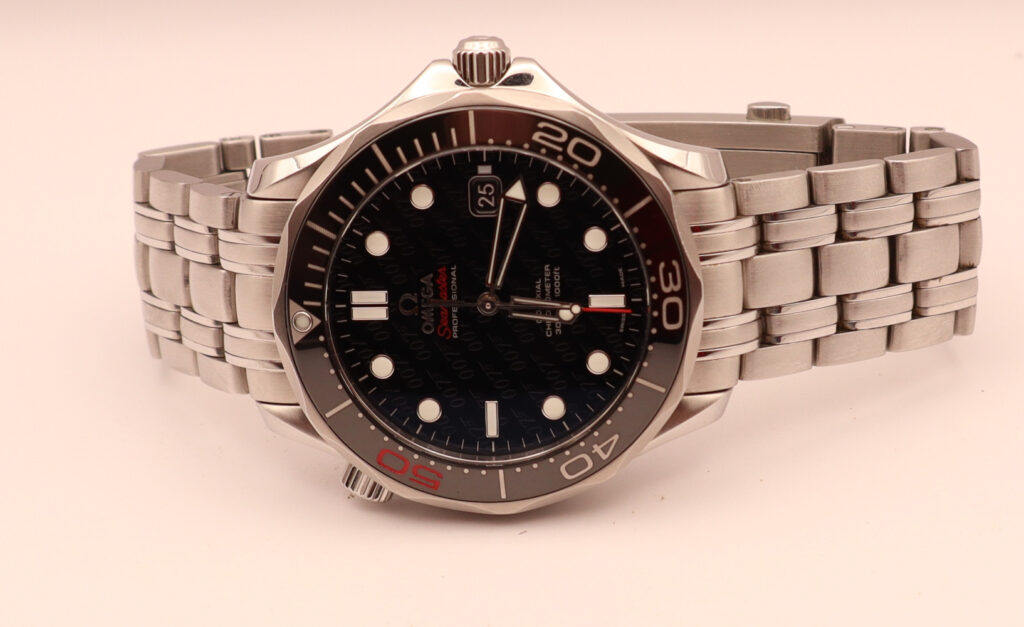
Seamaster Diver 300M
⦁ Famous for the wave pattern dial, helium escape valve at 10 o’clock, and skeletonized hands.
⦁ Modern Diver 300M models use CoAxial Master Chronometer movements, ceramic bezels, and sapphire display backs.
Seamaster Planet Ocean 600M (Core “Omega Planet Ocean”)
The Omega Seamaster Planet Ocean launched in 2005 as a more serious professional diver rated to 600 m, and has become one of the most searched “Omega watches for sale” by enthusiasts. Planet Ocean models feature bold bezels, thick cases, and often orange accents, with modern references using CoAxial Master Chronometer calibres.
Key Planet Ocean variants include:
- Case sizes: approximately 39.5 mm, 43.5 mm, and 45.5 mm, including large chronograph models.
- Threehand date, chronograph, and GMT versions, many with ceramic bezels and Liquid metal or enamel scales.
- “Deep Black” and colored ceramic cases that combine Planet Ocean design with full ceramic construction.
- Numerous special editions, including James Bond 007 Planet Ocean references tied to films like Casino Royale and Skyfall.
Seamaster Aqua Terra & Railmaster
- Aqua Terra: Versatile, water resistant everyday watches with teak pattern dials and high antimagnetic resistance, often marketed as refined alternatives to pure dive models.
- Railmaster: Originally an antimagnetic tool watch, recently revived with vintage style dials and straightforward three hand layouts.
Omega Constellation & Globemaster
The Omega Constellation, launched in 1952, was designed as a chronometergrade dress watch and remains one of Omega’s longest running lines. Classic Constellations are known for the star above 6 o’clock and the observatory medallion on the caseback, symbolizing precision in observatory trials.
- Modern Constellation “Manhattan” models use integrated bracelets, distinctive “claws” (griffes) on the bezel, and a mix of steel, gold, and gem set variants.
- The Globemaster subline modernizes midcentury piepan dials with Master Chronometer movements and fluted bezels.
Omega De Ville & Dress Collections
The De Ville name first appeared on Seamaster models and became its own collection in 1967 as Omega’s more formal, urban line. De Ville has since hosted some of Omega’s most advanced movements and highcomplication pieces, including tourbillons.
Key De Ville lines:
- De Ville Prestige: Classic, clean threehand and small complications aimed at dress watch buyers.
- De Ville Hour Vision & Trésor: Higherend pieces with elaborate cases and display backs, often housing early CoAxial calibres and later Master Chronometer movements.
- De Ville Tourbillon: Showcases Omega’s technical capabilities with central tourbillon constructions and precious metal cases.
Omega Watches for Sale: Buyer Considerations
For anyone actively searching “Omega watches for sale,” the main decisions revolve around collection, case size, movement type, and whether to buy new or preowned. Speedmaster and Seamaster references dominate enthusiast demand, with the Speedmaster Professional and Seamaster Diver 300M and Planet Ocean at the top of many wish lists.
When shopping preowned, buyers should pay close attention to originality of parts, presence of box and papers, and documented service history to preserve value and facilitate future resale. Many collectors prioritize Omega’s newer CoAxial Master Chronometer movements for their improved antimagnetism, extended service intervals, and certified accuracy.
FAQ: Omega, Speedmaster, Seamaster, Planet Ocean & Fakes
Is Omega a good luxury watch brand?
Yes, Omega is considered a top tier Swiss luxury brand with a long history of precision, innovation, and high profile partnerships, including the Olympic Games and James Bond films. Many Omega models, particularly Omega Speedmaster, Seamaster, and Planet Ocean references, are regarded as strong long term purchases with deep enthusiast support and robust servicing options.
What are the most important Omega Speedmaster models?
The cornerstone Speedmaster is the Speedmaster Professional Moonwatch, especially references derived from 105.012 and 145.012 that went to the Moon. Other key groups include the Speedmaster ’57, Reduced, Racing, Dark Side of the Moon, and special editions like Snoopy and Apollo themed models, which broaden the line from vintage inspired to aggressively modern.
What are the main Omega Seamaster and Planet Ocean models?
Within the Seamaster line, the Diver 300M, Aqua Terra, Planet Ocean 600M, and Railmaster are the core modern pillars. The Omega Planet Ocean subline sits at the more professional end of the spectrum with 600 m water resistance, bold bezels, chronographs, GMTs, and ceramic “Deep Black” variants.
Are Omega watches good everyday watches?
Many Omega models are engineered for daily wear, especially Seamaster Aqua Terra, Diver 300M, and Speedmaster references with modern CoAxial movements and reasonable water resistance. These watches combine durability, antimagnetic resistance, and serviceability, making them practical for buyers who want a single luxury watch as well as collectors rotating multiple pieces.
Do Omega watches hold their value?
While value retention varies by model, condition, and market trends, iconic lines like the Speedmaster Professional, popular Seamaster Diver 300M references, and certain Planet Ocean and limited editions tend to have stronger resale profiles. Collectors often gravitate toward historically important references, complete sets (box and papers), and modern Master Chronometer calibres, which can support more stable secondary market demand.
How to Spot a Fake Omega (Speedmaster, Seamaster, Planet Ocean)
Because demand for Omega watches for sale is high, counterfeits are common—especially in high traffic online marketplaces and social media. Checking a prospective purchase against known authentication points can help screen out obvious fakes before committing to a deal.
1. Dial Printing, Markers & Logos
- Genuine Omega dials have extremely crisp printing, with clean, even fonts and no ink bleed or fuzzy edges under magnification.
- Indices are sharply faceted or filled, with precise luminous application; misaligned markers, uneven lume plots, or sloppy edges are red flags, especially on Planet Ocean and Seamaster models.
- On many Speedmasters, the Omega logo at 12 o’clock is either a perfectly printed emblem or a finely applied metal logo; distorted shapes or incorrect logo style for the reference are warning signs.
2. Bezel, Helium Valve & Case Details
- On a real Omega Seamaster Diver 300M, the helium escape valve at 10 o’clock has a precise position: the base of the valve should align correctly near the 10 o’clock marker; obvious misalignment can indicate a fake.
- Planet Ocean bezels should rotate crisply with solid clicks, cleanly printed numerals, and highquality ceramic or aluminum inserts; rough action or lowquality printing suggests a replica.
- Case finishing should show sharp transitions between polished and brushed surfaces, with no soft, rounded edges or inconsistent brushing lines.
3. Serial Numbers, Caseback & Engravings
- Authentic Omega watches have unique serial numbers engraved on the case or case back; on many Planet Ocean models the serial is on the case back among other markings.
- Serial numbers, reference numbers, and Omega logos should be cleanly engraved, not shallowly etched, uneven, or misspelled.
- Caseback medallions and engravings, such as the Seamaster seahorse or Constellation observatory, should be sharply detailed rather than soft or cartoonish.
4. Movement Quality & Functionality
- A reliable way to spot a fake Omega is to look for spelling mistakes or incorrect engravings on the rotor, bridges, or movement back.
- Many counterfeits show poorly finished movements, visible blue colored screws in places Omega would not use them, or generic movements that do not match the layout of an authentic Omega calibre.
- Check that all sub dials and pushers actually function; fake chronographs often have nonworking or misaligned sub dials that only move together with the main hands.
5. Weight, Bracelet & Clasp
- Genuine Omega bracelets feel dense and solid, with tight tolerances and smooth articulation; very lightweight or rattly bracelets are suspect.
- The clasp should have correct Omega logos, reference engravings, and a robust, precise closing action; cheap stamping or inconsistent fonts can signal a fake.
6. Documentation, Box & Purchase Channel
- Original red or modern Omega warranty cards, pictogram cards, and matching serial numbers on the watch and paperwork significantly increase confidence.
- High end fakes sometimes include replica boxes and cards, so documents should still be checked carefully against known genuine examples and reference information.
- Buying from authorized dealers or well established, specialist preowned dealers reduces risk versus anonymous listings or low feedback sellers advertising “too good to be true” prices on Omega watches for sale.
7. Reference Specific Checks (Speedmaster vs. Seamaster vs. Planet Ocean)
- Speedmaster: Confirm correct case shape, pushers, dial layout, and whether the reference should have Hesalite or sapphire; mismatched features can indicate parts swapping or a fake.
- Seamaster Diver 300M: Look at the wave dial execution, skeletonized hands, correct helium valve placement, and ceramic bezel quality for current models.
- Omega Planet Ocean: Focus on dial detailing, applied indices, sharp case/bezel transitions, and correct case back and serial engravings, as these are the most reliable quick checks against common replicas.
Browse Omega watches for sale, inspected in-house and listed with full condition detail.
More Omega Resources
Browse Pre-Owned Buyer's Guides by Brand
- Pre-Owned Panerai Buyer's Guide
- Pre-Owned TAG Heuer Buyer's Guide
- Pre-Owned Breitling Buyer's Guide
- Pre-Owned Cartier Buyer's Guide
- Rolex Buyer's Guide
- Pre-Owned Hublot Buyer's Guide
- Pre-Owned Ulysse Nardin Buyer's Guide
- Pre-Owned Zenith Buyer's Guide
- Pre-Owned Grand Seiko Buyer's Guide
- Pre-Owned Jaeger-LeCoultre Buyer's Guide
- Pre-Owned Tudor Buyer's Guide
- Pre-Owned IWC Buyer's Guide